
What ETF investors are doing as AI leadership narrows
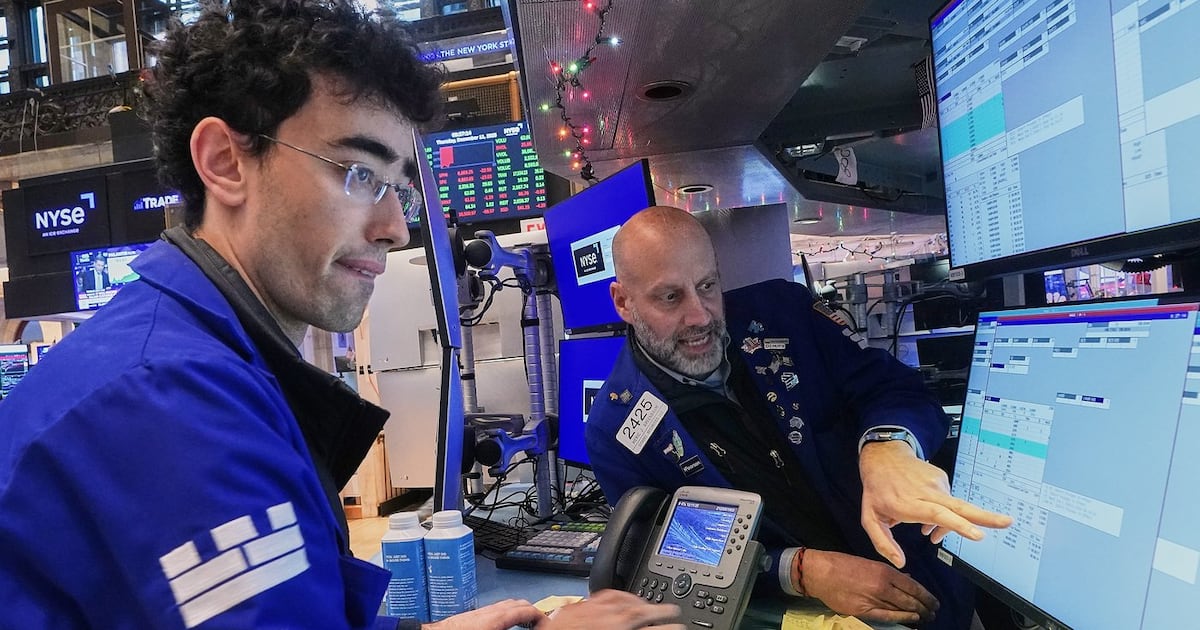
Markets are ending the year near record highs with volatility subdued, but ETF flows suggest leadership is shifting beneath the surface. Investors are rotating away from crowded AI and mega-cap trades toward sectors tied more directly to real-world buildout, infrastructure and adoption.
BNN Bloomberg spoke with Mike Philbrick, CEO of ReSolve Asset Management, about the surge in ETF inflows, the role of crypto-linked products and tokenization, and why AI beneficiaries across the broader economy may drive the next phase of market leadership.
Key Takeaways
- ETF flows suggest market leadership is rotating beneath calm index levels, with capital moving away from crowded AI and mega-cap trades.
- The current shift reflects reallocation rather than risk aversion, as investors reposition toward sectors tied to real economic activity.
- AI remains a long-term theme, but its impact is spreading beyond technology leaders into infrastructure, automation and capital investment.
- Financials, industrials, materials, healthcare and biotech may benefit as AI adoption accelerates across the real economy.
- Improving market breadth could allow small- and mid-cap stocks and Canadian equities to play a larger role in the next phase of returns.

Read the full transcript below:
ANDREW: OK, the ETF Report on Tuesdays and Thursdays. One phenomenon we’re seeing is pretty big inflows into so-called spot XRP ETFs. We’re joined now by Mike Philbrick, a keen observer of the ETF market. Mike is CEO of ReSolve Asset Management. Mike, thanks very much for joining us.
Apparently, these XRP ETFs are different from other crypto funds. XRP itself is the native token of the XRP Ledger, a blockchain designed to make global payments faster. So this is not so much a cryptocurrency as a method of smoothing payments?
MIKE: Well, yes. I think it is similar, to some degree, to the Ethereum and Solana blockchains. It is that layer that provides some opportunity for cross-border transactions, which can be challenging.
You can imagine trying to do a cross-border transaction — whether you’re paying a service provider or paying for resources — while dealing with different time zones and different bank opening hours. The idea that you could execute that at any time, 24/7, and do so at a relatively low cost is very appealing and does increase the velocity of money.
While the coin is a bit unique, it’s not that unique. These ETFs came on the heels of the resolution of the SEC lawsuit involving XRP and Ripple. What we’ve seen is a later-stage ETF launch and a preference from investors to own these digital assets through traditional rails, rather than having to worry about private keys and non-traditional custodial challenges.
ANDREW: Purpose Investments is among the players that has one of these spot XRP ETFs out, and they say this digital asset — this blockchain technology — is already being used by financial institutions around the world to help with cross-border money transfers. Is that correct?
MIKE: And that’s happening broadly and widely, too. It’s not just XRP and Ripple.
Ethereum has been used as well. JPMorgan said yesterday it’s launching a money market fund. You have the BUIDL institutional money market fund, managed by BlackRock, which is an institutional settlement layer for money market transactions that’s been operating for over a year, built on Ethereum.
We’re seeing actual use cases come to fruition. We’re also hearing about Nasdaq talking about trading for 23 hours a day, which is in preparation for — and competition with — crypto markets that already trade 24 hours a day. Paul Atkins has said that stocks, bonds and money market instruments will ultimately be tokenized. That’s coming from the SEC chair.
ANDREW: Mike, what trends are you watching in ETFs more broadly for 2026?
MIKE: What’s really interesting right now is the market looks like there’s nothing going on as it hovers near highs, but don’t be fooled. Under the surface, cash is rotating quite aggressively.
It’s rotating out of the AI darlings we’ve talked about before and into companies that either build the infrastructure required for AI or are deploying AI and automation in real time to leverage those use cases.
We’re seeing the S-curve of tech adoption collide with the J-curve of real-world buildout. Data centres need power. Power needs infrastructure. Engineers need more shifts. Factories need to expand. Markets need to prepare for longer trading hours.
The WSP news we saw recently is really about power grid muscle — power engineering infrastructure that needs to be built at scale. That rotation is real. Investors should look at their portfolios and ask whether they have too much exposure to the so-called “Mag 10.”
Even in Canada, look at the XCS, the TSX small-cap index, or the XMD, the TSX completion index. These indexes are heavily weighted toward financials, industrials and materials — companies that stand to benefit significantly from the rollout that’s underway.
You can also look at healthcare and biotech, which are areas that can deploy AI and build earnings from it. That’s the real use case going into 2026, and the markets are already signalling that if you look at the charts. They’re fairly bullish.
ANDREW: You mentioned XMD, which tracks stocks in the TSX Composite that aren’t in the TSX 60. Over the past year, that ETF is up nearly 40 per cent including distributions, or about 35 per cent excluding dividends.
Just finally, we’ve seen massive inflows into ETFs this year. Bloomberg estimates U.S. ETFs will take in about US$1 trillion this year, breaking the annual record by 17 per cent.
MIKE: Yes, and you’ve seen a lot of inflows into traditional passive strategies, but also a lot of innovation.
Single-stock covered-call and single-stock leveraged ETFs have gathered significant assets. Those are more trading-oriented than investing-oriented, but the range of opportunities available to investors has never been greater.
That also creates a paradox of choice. Investors should make sure portfolios are well balanced, that they have the right amount of bonds, and that they’re not overly concentrated in AI mega-caps.
For Canadian investors, Canada offers diversification that’s tilted toward what’s required to build AI infrastructure.
ANDREW: Another trend we’re seeing south of the border is that more companies are getting approval to have their mutual funds also trade as ETFs.
MIKE: Correct. That came after Vanguard’s patent expired. Vanguard had exclusivity on a structure that combined mutual funds and ETFs. Once that expired, many U.S. mutual funds began transitioning to ETFs.
The ETF structure allows for the deferral of capital gains, whereas mutual funds must distribute gains annually. That disadvantage is narrowing, and it’s creating a large rollover opportunity.
ANDREW: Mike, thank you very much. We appreciate it.
MIKE: It was a pleasure.
—
This BNN Bloomberg summary and transcript of the Dec. 16, 2025 interview with Mike Philbrick are published with the assistance of AI. Original research, interview questions and added context was created by BNN Bloomberg journalists. An editor also reviewed this material before it was published to ensure its accuracy and adherence with BNN Bloomberg editorial policies and standards.
link