


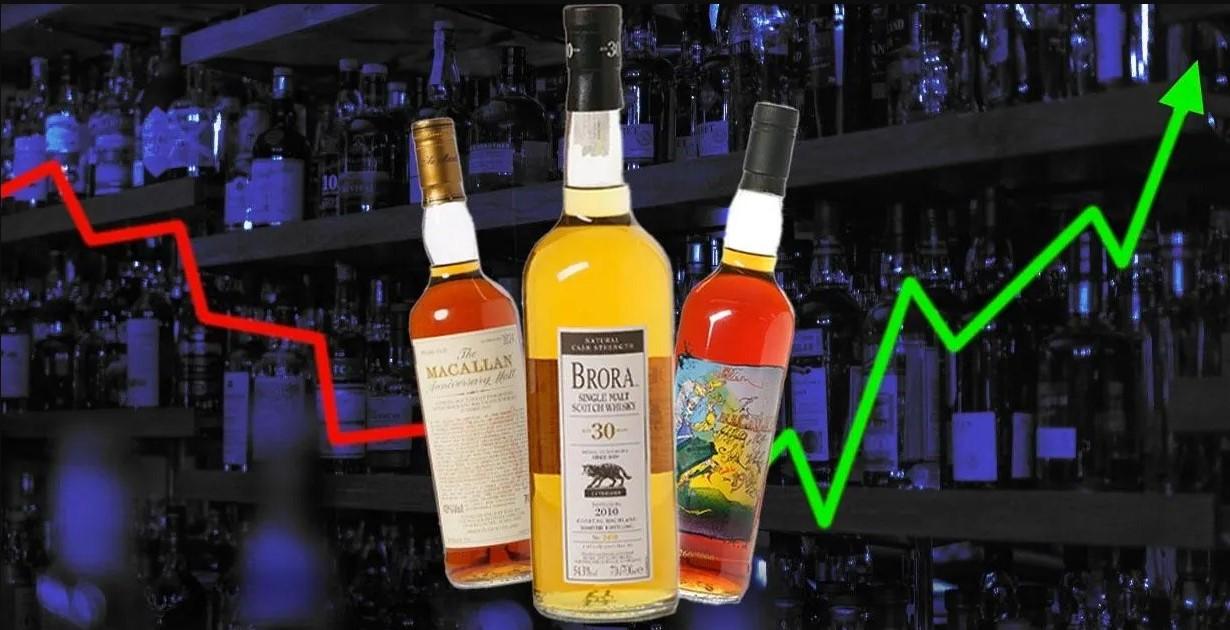

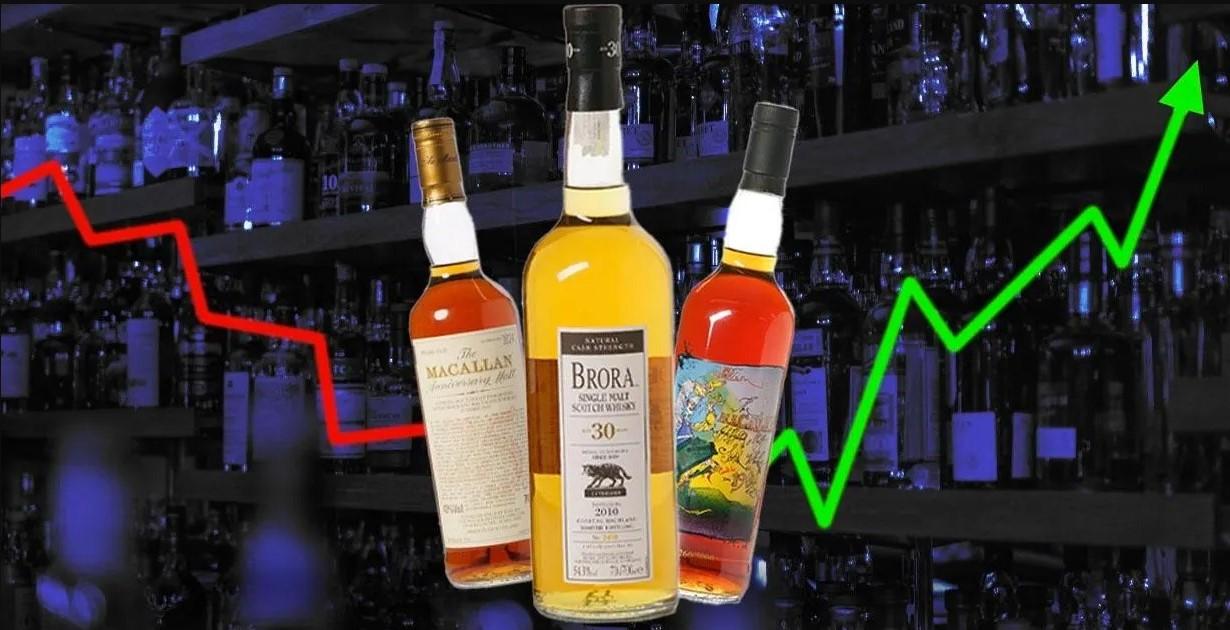
The whisky investment market has seen significant corrections over the last 18 months, with collectors watching their portfolios shrink as prices plummet from 2022’s dizzying heights. But seasoned investors see opportunity where others see loss.
Market Correction Brings Whisky Valuations Back to Earth
The Mark Littler 999 Index, which tracks the most traded collectable bottles, dropped 11% in 2024. This echoes a 9% decline in the Knight Frank Rare Whisky Index during 2023. For investors who entered the market during 2022’s peak, these numbers sting.
However, the long-term picture tells a different story. Current values have corrected to 2021 levels, while investors who entered in 2016 still enjoy 99% growth over eight years. At the 2022 peak, values had surged 188% since 2016 but even at the time that many experts considered that growth unsustainable.
“It is fair to say that 2024 has not been easy for people who trade in collectable bottles,” said Ben Bowers, founder of Spirits Sourcery, a specialist whisky brokerage. “I would estimate that getting deals done has doubled in difficulty.”
The Flip Market Has Disappeared
The days of quick profits from bottle flipping have vanished. Bowers points to the Macallan Red Collection 60-year-old as a prime example: “My current favourite example is the Macallan Red Collection 60-year-old, which is offered once a week at between $3,000 to $5,000 less than the week before.” This represents a significant shift from the early 2020s when bottles could be flipped for profit within weeks or months.
The Macallan’s Time:Space Mastery ballot also marked a turning point for me. It was the first Macallan ballot since 2018 that failed to sell out before reaching retail.
Cask Market Feels the Squeeze
The bottle market downturn has rippled through to the secondary whisky cask market as well. When retail bottles move slowly, demand for mature casks weakens. Prices haven’t necessarily fallen, but the buyer pool has shrunk dramatically compared to 12 months ago.


Phil Thompson from independent bottler Thompson Bros explained their adaptive approach: “We’ve applied a similar margin approach to our independent bottling as we do with the bottles served at the bar in Dornoch Castle. We don’t operate with a fixed margin target – it’s entirely flexible.”
Savvy Investors See Buying Opportunity
Experienced market players should still view 2025 as a prime buying opportunity. The speculative investors who drove up prices have largely departed, leaving behind collectors who understand whisky’s true value.
“The good news is the people who are most savvy about the market are the ones who remain,” Bowers noted. “They know the niches within a niche, where value can be found, and where appreciation is still happening.”
Bowers references Warren Buffett’s investment wisdom: “A simple rule dictates my buying: be fearful when others are greedy and be greedy when others are fearful.”
Market Fundamentals Remain Strong
The correction hasn’t changed whisky’s fundamental appeal as a collectible. The Macallan 1926, which sold for $2.7 million at Sotheby’s, remains significantly undervalued compared to other hyper-rare collectibles. For example a 1939 Spider-Man No.1 comic reached $5.3 million in 2022, while the 1952 Topps Mickey Mantle baseball card sold for $12.6 million.
Even recent Red Collection sales demonstrate resilience. While the highest hammer price of $168,000 in February 2024 dropped to $149,000 by October, it is worth remembering that buyers who purchased at the original $65,000 retail price in 2020 still achieved 129% growth.
Too Many Releases, Not Enough Buyers
Industry oversupply presents ongoing challenges. Distilleries have flooded the market with new releases, creating what Bowers calls “an arms race of releases.” Many limited editions in the $100 to $30,000 range struggle to find buyers, sitting in a value void where they neither appreciate significantly nor offer exceptional drinking pleasure. “A limited edition 12-year-old of twenty thousand bottles does not really resonate with anyone,” Bowers observed.
Looking Ahead to 2025
The market correction has created genuine opportunities for patient investors. Asia Pacific remains crucial for single malt scotch, and changes to Hong Kong’s whisky taxation should continue to have a positive influence on the premium whisky market. However, these effects will likely take time to fully manifest.
For investors with patience and market knowledge, 2024’s correction has reset prices to more sustainable levels. The speculative frenzy has ended, but whisky’s long-term investment potential remains intact for those willing to wait.
link